


日々の業務改善に有益なことを積み重ねる Pursuing Daily Operational Improvements — A Case Study of a Japanese Dispensing Pharmacy
富士市・富士宮市で在宅医療に携わっている薬剤師の栗原憲二です。
薬剤師と「歌」。薬剤師だって歌うのです。
昔、50で習い事と言われていたそうです。年齢を重ね、人生経験を積んできたからこそ出せる味わいというものもあろうかと思います。
一見すると結びつきが薄いように思われるかもしれません。調剤室とステージは、確かにまったく違う世界に見えます。
しかし私は、日々の臨床と自分自身の生活の中で、次第に確信するようになりました。
声を出すことは、肺を動かすこと。
肺を動かすことは、いのちを整えること。
そして歌うことは、人格を育てること。結局薬剤師としての働きというものも、一つの人格的な営みです。
人格的な成長があるからこそ、患者様に対しての説得力も生み出される、と.
薬学的な知見はもちろんのこと、人格を育てることだって薬剤師としての意味のあることだと実感しています。
そこで今日は、自分が歌ったりする中で感じることを、
・呼吸
・発声
・予防医学
・自己成長
について整理してみたいと思います。
目次
Response on Fujiyama Pharmacy’s Instagram
Breathing and the Autonomic Nervous System — A Medical Perspective
Breathing into the Lower Right Lung
Do Not Raise the Vocal Cords — Support Them
Vocalization and the Prevention of Aspiration Pneumonia
──────────────────────────
ふじやま薬局インスタグラムでの反響
先日、ふじやま薬局のインスタグラムで「歌う薬剤師」として『アメージング・グレイス』を投稿しました。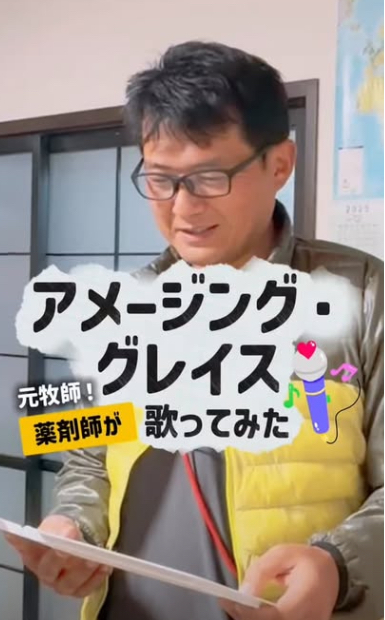
↓↓↓実際の投稿はこちら
https://www.instagram.com/reel/DUVKa6Pkwvz/?igsh=MXdmZGZrYXEyZmNtZw==
結果は、総アクセス数500超。
決してバズと言える規模ではありません。しかし、地域密着型の薬局アカウントとしては十分に意味のある数字でした。
「落ち着きました」
「癒されました」
「薬剤師さんが歌うんですね」
その反応を見ながら、私は改めて感じました。
歌は、他者だけでなく、自分自身を整える行為でもあるということです。
忙しい業務の合間。
処方監査、疑義照会、在庫管理、在宅訪問準備。判断の連続の中で、思考はどうしても緊張状態になります。
そのとき、数分間だけ歌う。
すると呼吸が深くなり、視野が広がり、思考が整理されます。
歌によって呼気が長くなることで、副交感神経が働きやすくなり、心拍や筋緊張が安定するため、思考の質が変わるのです。
歌は、思考のリセット装置のような働きをします。
──────────────────────────
呼吸と自律神経――医学的背景
呼吸は自律神経と密接に関係しています。
・浅く速い呼吸 → 交感神経優位(緊張)
・深くゆっくりした呼吸 → 副交感神経優位(安定)
呼吸は、意識的にも無意識的にもコントロールできる唯一の自律機能です。
歌唱では、フレーズを保つために自然と長い呼気が必要になります。
その結果、迷走神経が刺激され、副交感神経が優位になります。
呼気が長くなることで心拍数が安定し、血圧が緩やかに下がり、筋緊張が和らぎます。これが「落ち着く」という感覚の生理学的正体です。
在宅医療の現場では、
・不安感
・息切れ
・不眠
・軽度の抑うつ
といった症状をよく見かけます。
薬物療法は重要です。しかし呼吸が整うだけで、症状が軽減することもあります。
呼吸は、最も原始的で、最も本質的な治療手段の一つなのです。
──────────────────────────
右肺の下まで息を入れる
私が意識している発声のコツがあります。
それは「右肺の下の方まで息を吸い込む」ということです。
右肺は三葉構造で、下葉までしっかり空気を入れるには意識が必要です。
ポイントは、鼻から静かに「スッ」と吸うこと。
鼻呼吸では横隔膜が下がりやすく、腹部が自然に広がります。これにより肺下部まで空気が入りやすくなります。
鼻呼吸には、
・加湿
・フィルター機能
・温度調整
という医学的利点もあります。
肺の下部まで空気が入ると、声量が安定し、息が続き、喉が疲れにくくなります。
これは感覚論ではなく、構造に基づいた現象です。
──────────────────────────
声帯は上げない、支える
高音を出そうとして喉を持ち上げる。
これは典型的な誤りです。
声帯の位置は安定させ、音程は口腔共鳴で作ります。
私はこう表現します。
「声帯は鎖骨のあたりで支える」
鎖骨周辺を広げ、胸郭を安定させると、喉の過緊張が抜け、声帯への負担が減ります。
発声においても、身体構造を理解し、無理に押さず「支える」ことが重要なのです。
これは薬学的思考と同じです。
力で押すのではなく、仕組みを理解する。
──────────────────────────
誤嚥性肺炎予防と発声
大学時代、私はゴスペルサークルを主催していました。
その際、市民オペラを指導していた教官から教わったことがあります。
「発声は誤嚥性肺炎の予防にも有効だよ」
誤嚥性肺炎は、
・嚥下機能低下
・咳反射低下
・呼吸筋の衰え
が背景にあります。
発声訓練では声門閉鎖機能が維持され、呼吸筋が鍛えられ、咳反射の力も保たれます。
実際、高齢者施設では歌唱プログラムが導入されています。
歌は娯楽であると同時に、予防医学的価値を持つ行為なのです。
在宅医療の現場で誤嚥性肺炎を防ぐことは、QOL維持に直結します。
──────────────────────────
江戸時代の「50歳からの習い事」
江戸時代には、50歳になったら習い事を始めるという習慣があったと言われています。
人生後半を守りに入るのではなく、人格を磨く。
歌うことは、
・呼吸を鍛える
・姿勢を整える
・集中力を養う
・感情を言語化する
行為です。
歌は、身体だけでなく人格を育てる訓練でもあるのです。
私は一人の企業人として、自分自身を育てる手段として歌は有効だと感じています。
経営も医療も、最後は「人」です。
感情を制御し、冷静に判断し、温度を持って対話する。その基礎にあるのが呼吸と声です。
──────────────────────────
歌は自己研鑽である
歌うことは、
・身体トレーニング
・メンタル調整
・人格形成
・予防医学
という複合的価値を持ちます。
私は歌を通して、
・焦らない
・力まない
・構造を理解する
・継続する
という姿勢を学びました。
歌は、いのちのトレーニングであり、人格の鍛錬でもあるのです。
それはそのまま、薬剤師の仕事に還元されています。
──────────────────────────
今日からできる実践
1.鼻から静かに吸う
2.右肺の下へ空気を落とす
3.10秒かけて吐く
4.一定の音で「あー」と出す
これを3回。
呼気を長くすることが、副交感神経を働かせる最大のポイントです。
たったそれだけで、呼吸は整い始めます。
──────────────────────────
もしよろしければ、今日、少し意識して深く息を吸ってみてください。
声は、いのちを整え、人格を整える力を持っています。
そこから、新しい成長が始まるかもしれません。
I am Kenji Kurihara, a pharmacist engaged in home medical care in Fuji City and Fujinomiya City.
Pharmacists and “singing.”
At first glance, the connection may seem weak. The dispensing room and the stage appear to belong to completely different worlds.
Yet through my daily clinical practice and personal life, I have gradually come to a conviction.
To raise one’s voice is to move the lungs.
To move the lungs is to regulate life itself.
And to sing is to cultivate one’s character.
Today, from the perspective of a “singing pharmacist,” I would like to reflect on breathing, vocalization, preventive medicine, and personal growth.
目次
Response on Fujiyama Pharmacy’s Instagram
Breathing and the Autonomic Nervous System — A Medical Perspective
Breathing into the Lower Right Lung
Do Not Raise the Vocal Cords — Support Them
Vocalization and the Prevention of Aspiration Pneumonia
──────────────────────────
Response on Fujiyama Pharmacy’s Instagram
Recently, I posted “Amazing Grace” on Fujiyama Pharmacy’s Instagram as the “singing pharmacist.”
↓↓↓Here is the actual post
https://www.instagram.com/reel/DUVKa6Pkwvz/?igsh=MXdmZGZrYXEyZmNtZw==
The result was over 500 total views.
It was not what one would call viral. However, for a community-based pharmacy account, it was a meaningful response.
“I felt calm.”
“It was healing.”
“I didn’t know a pharmacist would sing.”
Reading these comments, I once again realized something important.
Singing is not only an act that settles others—it also settles oneself.
In the midst of busy work—
prescription review, inquiries to physicians, inventory management, preparation for home visits—decision-making never stops. Under such conditions, the mind inevitably enters a state of tension.
At such times, singing for just a few minutes makes breathing deeper, broadens one’s perspective, and organizes one’s thoughts.
Because singing naturally lengthens exhalation, it activates the parasympathetic nervous system, stabilizes heart rate and muscle tension, and thereby improves the quality of thinking.
Singing functions almost like a reset device for the mind.
──────────────────────────
Breathing and the Autonomic Nervous System — A Medical Perspective
Breathing is closely connected to the autonomic nervous system.
• Shallow, rapid breathing → Sympathetic dominance (tension)
• Deep, slow breathing → Parasympathetic dominance (stability)
Breathing is the only autonomic function that can be controlled both consciously and unconsciously.
In singing, long exhalations are naturally required to sustain musical phrases. As a result, the vagus nerve is stimulated, and parasympathetic activity becomes dominant.
When exhalation lengthens, heart rate stabilizes, blood pressure gently decreases, and muscular tension eases. This is the physiological basis of what we describe as “feeling calm.”
In home medical care, I frequently encounter patients experiencing:
• Anxiety
• Shortness of breath
• Insomnia
• Mild depressive symptoms
Pharmacotherapy is important. Yet sometimes, simply regulating breathing can alleviate symptoms.
Breathing is one of the most primitive—and most essential—therapeutic tools available to us.
──────────────────────────
Breathing into the Lower Right Lung
There is a particular technique I consciously apply in vocalization:
“Breathing into the lower part of the right lung.”
The right lung consists of three lobes. Filling the lower lobe effectively requires deliberate awareness.
The key is to inhale quietly and smoothly through the nose.
Nasal breathing allows the diaphragm to descend more easily, naturally expanding the abdomen and enabling air to reach the lower portions of the lungs.
Nasal breathing also provides:
• Humidification
• Filtration
• Temperature regulation
When air reaches the lower lung regions, vocal stability improves, breath is sustained longer, and strain on the throat decreases.
This is not merely subjective sensation; it is a structural and physiological phenomenon.
──────────────────────────
Do Not Raise the Vocal Cords — Support Them
Many people attempt to raise their larynx when producing higher notes. This is a common mistake.
The position of the vocal cords should remain stable; pitch is shaped by resonance within the oral cavity.
I often describe it this way:
“Support the vocal cords around the collarbone.”
By widening the area around the clavicle and stabilizing the rib cage, excessive throat tension is released and strain on the vocal cords is reduced.
Even in vocalization, it is essential to understand the body’s structure and to support rather than force.
This parallels pharmaceutical thinking: not applying force blindly, but understanding mechanisms.
──────────────────────────
Vocalization and the Prevention of Aspiration Pneumonia
During my university years, I led a gospel choir. At that time, a professor who directed community opera once told me:
“Vocal training is effective in preventing aspiration pneumonia.”
Aspiration pneumonia is associated with:
• Reduced swallowing function
• Diminished cough reflex
• Weakening of respiratory muscles
Vocal training helps maintain glottal closure function, strengthens respiratory muscles, and preserves cough strength.
In fact, some elderly care facilities implement singing programs for this reason.
Singing is not merely recreation; it also possesses preventive medical value.
In home medical care, preventing aspiration pneumonia is directly linked to maintaining quality of life.
──────────────────────────
The Edo-Era Practice of “Beginning Lessons at Age 50”
It is said that during the Edo period, there was a custom of beginning a new lesson at the age of fifty.
Rather than retreating in later life, one would refine one’s character through new learning.
Singing:
• Trains breathing
• Improves posture
• Cultivates concentration
• Refines emotional expression
Singing is training not only for the body, but also for character.
As a businessperson and healthcare professional, I find singing to be a valuable means of personal development.
Both management and medicine ultimately depend on people.
The ability to regulate one’s emotions, make calm decisions, and engage others with warmth rests upon the foundation of breath and voice.
──────────────────────────
Singing as Self-Discipline
Singing encompasses:
• Physical training
• Mental regulation
• Character formation
• Preventive medicine
Through singing, I have learned:
• Not to rush
• Not to force
• To understand structure
• To persevere
Singing is training for life itself—and a discipline of character.
These lessons are directly reflected in my work as a pharmacist.
──────────────────────────
A Simple Practice You Can Try Today
1.Inhale quietly through your nose
2.Let the air settle into the lower right lung
3.Exhale slowly over ten seconds
4.Sustain a steady “ah” sound
Repeat this three times.
Lengthening the exhalation is the key to activating the parasympathetic nervous system.
Even this simple exercise begins to regulate your breathing.
──────────────────────────
If you are willing, take a moment today to consciously inhale deeply.
Your voice has the power to regulate life—and to refine character.
From that breath, a new stage of growth may begin.