
患者様の宝箱の中に飛び込んでのサポート
目次
1) At the Beginning of a New Year: Reexamining My Own “Shape of Dreams”
2) Goals for Welcoming the New Year
3) What Are the Elements of a Dream?
5) What “the Hawk” Means to Me
1)新しい年のはじまりに、「夢のかたち」を見つめ直す
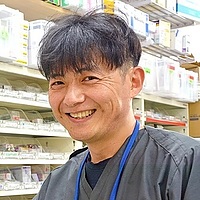
あけましておめでとうございます。昨年度も多くの方々との交わりに感謝申し上げます。富士市・富士宮市で在宅医療に携わっている薬剤師の栗原憲二です。今年もよろしくお願いします。
新しい年を迎えると、多くの人が「今年はどんな一年になるだろうか」と、少しだけ立ち止まり、これからの歩みを思い描くのではないでしょうか。
私も例外ではありません。
忙しい日常の中では、目の前の業務をこなすことに精一杯になりがちですが、年のはじめだけは、あえて視線を遠くに向け、自分の心の奥にある願いや姿勢を確かめるようにしています。
そんなとき、ふと思い浮かぶのが「一富士二鷹三茄子」という言葉です。
初夢に見ると縁起が良いとされる、この少し不思議で、どこかユーモラスな言葉。
今回は、この「一富士二鷹三茄子」を手がかりに、新しい年をどう生きたいのか、私自身の目標や価値観を整理してみたいと思います。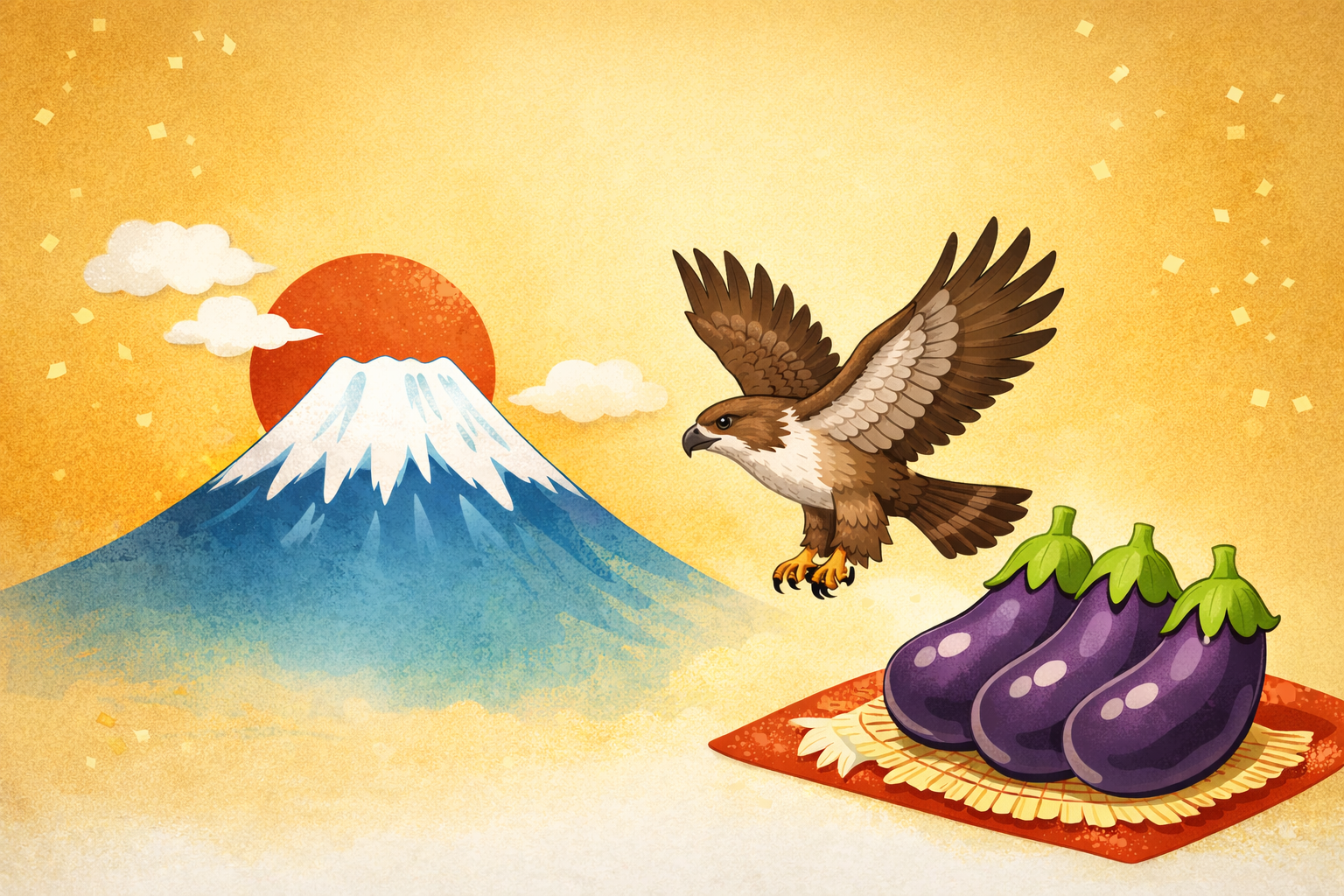
⸻
2)新しい年を迎えるにあたっての目標
仕事を喜ぶこと
まず、何よりも大切にしたいのは「仕事を喜ぶこと」です。
在宅医療の現場は、決して楽なことばかりではありません。時間に追われる日もあれば、判断に迷い、責任の重さに押しつぶされそうになる瞬間もあります。
多くの人が関わる現場なので、毎回、同じ様にはいきません。
それでも、仕事を「やらされているもの」として捉えるのか、「させてもらっているもの」として受け止めるのかで、同じ一日はまったく違った色を帯びると感じます。
仕事によって得られる報酬は、極端に言えばボーナスのようなもの。そう割り切ってしまえば、日々の業務そのものが感謝の対象になります。
多くの患者さん、ご家族、医療・介護職の方々と関わり、人格と人格が触れ合う時間を持てること。
それ自体が、薬剤師として、そして一人の人間としての喜びです。
今年も、その喜びを感じながら仕事に向き合っていきたいと思っています。
新しいことにチャレンジすること
次に掲げたいのは「新しいことにチャレンジすること」です。
新しい挑戦は、ワクワクする反面、自分の未熟さや足りなさを容赦なく突きつけてきます。正直に言えば、それは決して心地よい体験ではありません。
しかし、足りなさに気づくからこそ、成長の芽が見えてくるのだと思います。
何も挑戦しなければ、今の自分を守ることはできるかもしれませんが、それ以上の自分には出会えません。
新しいことに手を伸ばし、時には失敗し、試行錯誤しながら、自分を少しずつブラッシュアップしていく。
その積み重ねが、結果として患者さんや地域へのより良い医療につながると信じています。
夢を描くこと
そして三つ目が「夢を描くこと」です。
夢を思い描くことは、誰にでも許された自由です。それが実現可能かどうかは、実はそれほど重要ではありません。
私は、「夢」と「目標」は似ているようで、少し違うものだと感じています。
目標は、夢に近づくための具体的な手段や通過点。
一方で夢は、もっと曖昧で、輪郭がはっきりしなくてもいいものです。
「夢が叶う」という出来事も、振り返ってみると、思い描いていた形とは違う形で実現していることが多いものです。
気がついたら、いつの間にか叶っていた。そんな経験をされた方も多いのではないでしょうか。
大切なのは、手段と目的を取り違えないこと。
その意味では、実現不可能に思えるくらい大きな夢ほど、人生を豊かにする力を持っているのかもしれません。
⸻
3)夢の要素とは何か
― 一富士二鷹三茄子を読み解く
「一富士二鷹三茄子」には、さまざまな由来や解釈があります。特に私の仕事をしている静岡では家康公に因むものとして親しまれている伝承です。
ただ、こうした縁起物の話は、後から意味づけされたものも少なくありません。
富士山が素晴らしいのはいうまでもありません。
いつも富士山は、異なった表情で私たちの目を魅了し続けてくれています。
その富士の裾野を飛ぶ鷹なんてのも、それが自分であったらなんと素敵でしょう。天国にも至る心地がするでしょう。
私が少し面白いと感じているのは、三つ目の茄子です。
茄子は「夢の中で見にくい存在」という点が、非常に意味深く感じられます。
黒っぽく、形も地味で、印象に残りにくい。
だからこそ、夢に出てきたら「珍しいもの」として受け止められたのではないか。
転じて、夢で見られたら縁起が良いというわけです。
そんな想像も、あながち的外れではないように思います。
この三つを、自分自身の一年の目標に重ねて考えてみました。
⸻
4)自分にとっての「富士」とは何か
リスクをとって臨むもの
富士山は、誰にとっても特別な存在です。
登山となれば、高山病や天候の急変、体調不良など、さまざまなリスクが伴います。どれだけ準備しても、途中で引き返さざるを得ないこともあります。
それでも、多くの人が富士山に挑むのは、リスクを取るからこそ得られる景色や達成感があるからです。
大切なのは、リスクを無視することではありません。
むしろ、リスクを最小限に抑える努力を惜しまないことです。
本当に避けるべきなのは、リスクを恐れるあまり、何もしないこと。
挑戦しなければ失敗はしないかもしれませんが、成功もありません。
多くの企業や組織が新しいことに挑んでいる今、自分自身もまた、その一員でありたいと思っています。
余計なものを剥ぎ取るもの
登山に、余計な荷物は持っていけません。
持っていけるとしても、それは厳選された最低限のものだけです。
人生も同じで、抱えすぎると判断が鈍ります。
何が本当に大切なのか。何を手放してもいいのか。
それを見極めることで、自分の価値観や人生観が少しずつはっきりしてくるのだと思います。
自分と向き合うこと
登山は、決して楽ではありません。
足は痛くなり、雨に打たれ、思うように進めないこともあります。
それでも、登山が与えてくれる喜びは、それを上回るものがあります。
だからこそ、多くの人が山に魅了されるのでしょう。
自分と向き合い、自分自身を知る。
富士は、私にとってその象徴です。
⸻
5)自分にとっての「鷹」とは何か
高い視点を保つこと
鷹は、高い空から地上を見渡します。
サッカー選手の中には、自分自身を俯瞰して見ている感覚を持つ人がいると言われます。小野伸二さんや遠藤保仁さんなどです。
具体的には、自分の仕事を複数の視点で見直すこと。
少なくとも三つの立場から確認することで、物事を立体的に捉えられるようになります。
飛ぶことを当たり前にする
鷹は、自分が空を飛べる理由を考えていないでしょう。
飛べることは、彼らにとって当たり前のことです。
自分自身も、できることを特別視せず、当たり前として積み重ねていきたい。
そして、できなかったことができるようになったら、それもまた当たり前にしていく。
そんな姿勢を大切にしたいと思います。
狙いを定め、飛び込むこと
鷹は獲物を定め、一気に飛び込みます。
ただし、判断は常に修正可能です。
うまくいかなければ、別の方法を考えればいい。
柔軟さと覚悟の両立。
それが、今の時代には必要だと感じています。
新しい情報をキャッチすること
高い視点は、新しい情報をもたらします。
変化の速い時代だからこそ、多様な情報源や人とのつながりを通して、必要なものを取り入れていきたい。
時には「課金」することも、その一つです。
今は様々なビジネスの学習をする機会がインターネット上にあります。SNSでも同様です。
有料セミナーに参加すれば、その分、何かを回収しようとして能動的な学びになることが多いものです。
chatGPTの様なAIに課金することは常識とも言えます。ビジネスでも日常での困りごとでも、無料版のものよりも遥かに有能な助け手となってくれます。
学びに投資することは、不確定に変化する未来への準備と言えます。
またSNSで積極的に情報を発信すると、不思議なことに新しい情報が向こうから集まってきます。これは情報を発信した人でなければ得られない体験です。
⸻
6)自分にとっての「茄子」とは何か
見にくいものに目を向けること
夢の中で茄子は見にくい存在です。
だからこそ、見えたときの喜びがあります。
人生においても、目を背けたくなるものがあります。
自分の欠点や短所、失敗。
しかし、そこに目を向けることでしか、見えてこないものがあるのだと思います。
見えたなら、記録して残すこと
せっかく気づいても、忘れてしまっては意味がありません。
見えたものは、記録し、残す。
いつか、それを活かす道筋が見えてくるはずです。
楽しさ、ユーモアを忘れないこと
夢に茄子が出てくる。
それだけで、少し可笑しく、誰かに話したくなるものです。
一年の歩みも、そんなユーモアを忘れずにいたい。
深刻になりすぎず、笑いながら進む。
それもまた、良い夢の条件なのだと思います。
⸻
7)おわりに
一富士二鷹三茄子。
この言葉は、単なる縁起担ぎではなく、新しい年をどう生きるかを問い直すヒントを与えてくれます。
高く望み、広く見渡し、見にくいものにも目を向ける。
そんな一年を、丁寧に歩んでいきたいと思います。
皆様におかれましても更なるご活躍を、祝してお祈り申し上げます。
この文章が、読者の皆さんにとって、ご自身の「初夢」を考えるきっかけになれば幸いです。
Ichifuji, Nitaka, Sannasu
1) At the Beginning of a New Year: Reexamining My Own “Shape of Dreams”
I am Kenji Kurihara, a pharmacist involved in home medical care in Fuji City and Fujinomiya City.
When a new year begins, many people pause for a moment and wonder, “What kind of year will this be?” as they imagine the path that lies ahead.
I am no exception.
In the midst of busy daily routines, it is easy to become completely absorbed in handling the tasks right in front of us. However, at the very beginning of the year, I deliberately lift my gaze farther ahead and take time to confirm the wishes and attitudes that lie deep within my heart.
At such times, the phrase “Ichifuji, Nitaka, Sannasu” comes to mind.
It is said to be auspicious if seen in one’s first dream of the year—a slightly mysterious phrase with a touch of humor.
Using this phrase as a guide, I would like to整理 my own goals and values and reflect on how I want to live in the year ahead.
⸻
2) Goals for Welcoming the New Year
Finding Joy in One’s Work
Above all, what I want to cherish most is “finding joy in my work”.
The field of home medical care is by no means easy. There are days when we are pressed for time, moments when decisions are difficult, and times when the weight of responsibility feels almost overwhelming.
Because many people are involved, no two situations are ever exactly the same.
Even so, whether we view our work as something we are “forced to do” or something we are “allowed to do” makes the very same day take on a completely different color.
The compensation we receive for our work can be thought of, in an extreme sense, as a bonus. Once we see it that way, our daily work itself becomes an object of gratitude.
Being able to interact with many patients, their families, and medical and caregiving professionals, and to share moments where one personality encounters another—
that in itself is a joy, both as a pharmacist and as a human being.
This year as well, I want to face my work while truly feeling that joy.
Challenging Myself with New Things
The next goal I want to set is “challenging myself with new things.”
New challenges are exciting, but at the same time they mercilessly reveal our immaturity and shortcomings. To be honest, this is not a comfortable experience.
However, I believe that it is precisely because we become aware of what we lack that the seeds of growth begin to emerge.
If we never take on challenges, we may be able to protect who we are now, but we will never encounter a version of ourselves beyond that.
By reaching out to new things, sometimes failing, and repeatedly polishing myself through trial and error, little by little,
I believe that this accumulation ultimately leads to better medical care for patients and the community.
Drawing Dreams
The third goal is “drawing dreams.”
To imagine dreams is a freedom granted to everyone. Whether or not they are realistically achievable is, in fact, not all that important.
I feel that “dreams” and “goals” may seem similar, but they are slightly different.
Goals are concrete means or milestones for approaching a dream.
Dreams, on the other hand, can be more vague, without clearly defined outlines.
When we look back, many events described as “a dream coming true” often take shape in ways quite different from what we originally imagined.
Before we realize it, the dream has already come true. Many people may have had such experiences.
What matters most is not confusing the means with the purpose.
In that sense, dreams that seem impossible to achieve may actually possess a greater power to enrich our lives.
⸻
3) What Are the Elements of a Dream?
— Interpreting “Ichifuji, Nitaka, Sannasu”
“There are many origins and interpretations of the phrase ‘Ichifuji, Nitaka, Sannasu.’ In Shizuoka, where I work, it is especially familiar as a tradition associated with Tokugawa Ieyasu.
That said, many such auspicious stories are meanings added later.
It goes without saying that Mount Fuji is magnificent.
It continually fascinates us with its ever-changing expressions.
And imagine a hawk flying over the foothills of Fuji—how wonderful it would be if that were oneself. It would feel almost heavenly.
What I personally find particularly interesting is the third element, the eggplant.
The fact that an eggplant is described as “something difficult to see in a dream” feels especially meaningful.
Its dark color and modest shape make it easy to overlook and hard to remember.
Precisely because of that, if it appears in a dream, it may have been received as something rare.
From there, it came to be considered auspicious to see it in a dream.
Such an interpretation does not seem entirely far-fetched to me.
I tried to overlay these three elements onto my own goals for the year ahead.
⸻
4) What “Fuji” Means to Me
Facing Risk Head-On
Mount Fuji is a special presence for everyone.
When it comes to climbing it, various risks accompany the challenge: altitude sickness, sudden changes in weather, and physical problems. No matter how well prepared one is, there are times when one must turn back.
Even so, many people challenge Mount Fuji because there are views and a sense of achievement that can only be gained by taking risks.
What matters is not ignoring risk.
Rather, it is not sparing effort to minimize risk.
What should truly be avoided is doing nothing out of fear of risk.
If we do not challenge ourselves, we may avoid failure—but we will also never succeed.
At a time when many companies and organizations are taking on new challenges, I want to be one of those who do the same.
Stripping Away the Excess
When climbing a mountain, you cannot carry unnecessary baggage.
Even if you bring anything, it must be carefully selected and kept to a minimum.
Life is the same. When we carry too much, our judgment becomes clouded.
What truly matters? What can we let go of?
By discerning these things, our values and outlook on life gradually become clearer.
Facing Oneself
Climbing a mountain is never easy.
Your legs ache, you get soaked in the rain, and there are times when you cannot move forward as you wish.
Even so, the joy that mountain climbing gives far outweighs those hardships.
That is why so many people are drawn to the mountains.
Facing oneself and getting to know who one truly is.
For me, Mount Fuji is a symbol of that process.
⸻
5) What “the Hawk” Means to Me
Maintaining a High Perspective
A hawk looks down at the ground from high in the sky.
Some soccer players are said to have the ability to view themselves from a bird’s-eye perspective—players such as Shinji Ono and Yasuhito Endo.
Concretely, this means reviewing one’s work from multiple perspectives.
By checking it from at least three different standpoints, it becomes possible to grasp things in a more three-dimensional way.
Making Flying the Norm
A hawk probably does not think about why it can fly.
For it, flying is simply normal.
In the same way, I want to treat what I can do not as something special, but as something natural.
And when I become able to do something I once could not, I want that too to become normal.
I want to cherish that kind of attitude.
Fixing One’s Aim and Diving In
A hawk fixes its target and dives in all at once.
However, its judgment can always be adjusted.
If something does not work, it can try another approach.
The balance between flexibility and resolve.
I feel that this is what is required in our time.
Catching New Information
A high perspective brings new information.
Because we live in an age of rapid change, I want to absorb what is necessary through diverse information sources and human connections.
Sometimes, paying for learning is part of that.
Investing in learning is preparation for the future.
⸻
6) What “the Eggplant” Means to Me
Turning One’s Eyes to What Is Hard to See
In dreams, an eggplant is something hard to see.
That is precisely why there is joy when it is seen.
In life as well, there are things we want to avert our eyes from:
our own weaknesses, shortcomings, and failures.
However, I believe that there are things that can only be seen by turning our eyes toward them.
Recording What We Have Seen
Even if we notice something, it is meaningless if we forget it.
What we see should be recorded and preserved.
Someday, a path for making use of it will surely appear.
Not Forgetting Enjoyment and Humor
Seeing an eggplant in a dream—
that alone feels a little amusing and makes you want to tell someone about it.
I want to live this year as well without forgetting that sense of humor.
Not becoming overly serious, but moving forward with a smile.
That, too, may be one of the conditions for a good dream.
⸻
7) In Closing
Ichifuji, Nitaka, Sannasu.
This phrase is not merely a superstition for good luck, but a hint that prompts us to reconsider how we want to live in the new year.
Aspiring high, seeing broadly, and turning our eyes even to what is hard to see—
I want to walk through this year carefully, with that mindset.
I hope this essay will become an opportunity for readers to reflect on their own “first dream” of the year.