

胃腸の不調――忙しい30代ほど起きやすい「胃のサイン」を薬剤師が整理します
富士市富士宮市にて在宅医療に携わっている薬剤師の栗原です。
「薬屋のひとりごと」手帳?
https://kusuriyanohitorigoto.jp/news/1174/
先日、「薬屋のひとりごとのお薬手帳ありませんか?」とお尋ねになってこられた患者様がいらっしゃいました。「いえ、すみません。ちょっと分からないです」とついついお答えしてしまったのですが、後で調べてみると日本薬剤師会とアニメがコラボレーションしたお薬手帳とのことでした。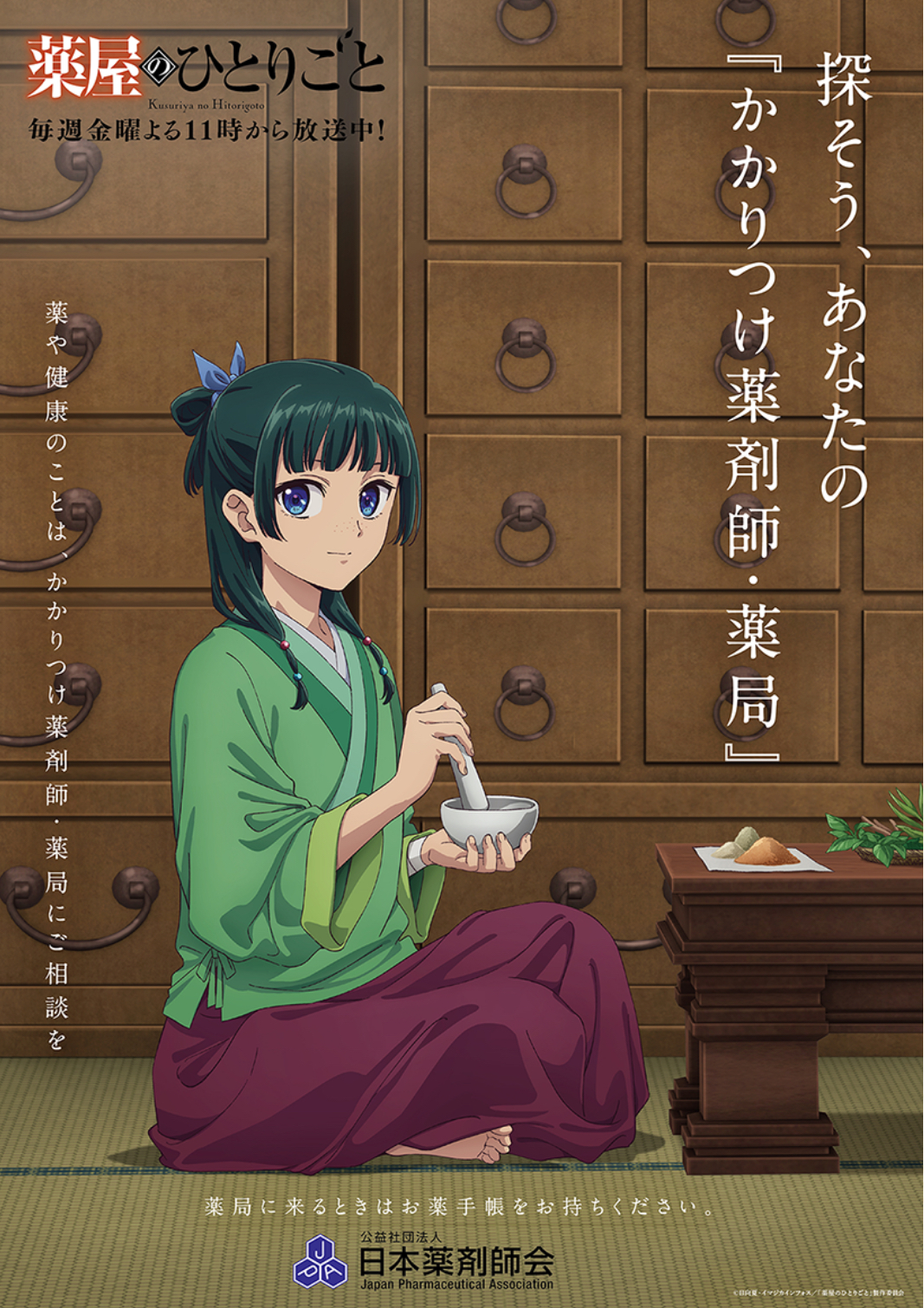
大人気のようで、とあるフリーマーケットサイトでは高額で取引されているとのことでした。
そもそもお薬手帳とは?
お薬手帳は患者様に処方されたお薬の情報シールを貼ったり、アレルギー歴や病歴などを記載することで、これをもっていれば日本全国、どこの病院に寄っても、現状の患者様の内服状況などが把握できる優れものとなっています。基本、無料で薬局などで配布されているため、フリーマーケットなどで販売されることは想定されていません。
かかりつけ薬剤師とは?
またこのお薬手帳の表紙に記載されている「かかりつけ薬剤師」とはなんでしょうか?
かかりつけ薬剤師とは、患者様の選択で特定の薬局の薬剤師が担当となり、他の病院から処方されるお薬や、ドラッグストアで購入するお薬、健康食品との飲み合わせなどについて、総合的問い合わせ窓口となる存在のことです。
よってあちこちの薬局に「かかりつけ薬剤師」がいるのではなく、患者様1人につき、1人の薬剤師が担当します。
担当となるのですから、普段の日常においてもその薬剤師は、その患者様の相談になる務めが与えられています。必ず連絡先として、その担当薬剤師につながる連絡先を入手して頂くことが可能です。
極端なことを考えてみましょう。その患者様が独居で、身寄りがなく、ある日転倒し、病院に救急搬送されたとします。その場合、病院側にとって困る事態は、普段その患者様がなんのお薬を飲んでいるのか(そもそもお薬を飲んであるのかどうかも含めて)不明である事態なのです。
入院中も、継続中のお薬を飲む必要がある場合が多いので、お薬手帳があればとても助かります。そしてそのお薬手帳を管理するのが「かかりつけ薬剤師」なのです。加えて、もしもそのお薬手帳がどこかに紛失されてしまっていたとしても、かかりつけ薬剤師は、薬局で管理保管している服薬指導記録から、病院側に情報提供をする事が出来ます。
今回、『薬屋のひとりごと』という、大変人気らしいアニメの影響力を介してかかりつけ薬剤師について皆様に知って頂く機会が与えられていることは、すべての薬剤師にとってこの上ない喜びなのです。
・・とは言え、私の言葉の端々にすでに現れているように、わたしはアニメ、漫画に普段、特別親しんでいる訳ではない。しかしここまで世間を賑わしているアニメですから、そんな私でも触手が伸びるものです。早速、レンタル屋さんにて『薬屋のひとりごと』の第1巻を借り出して読んでみることにしました。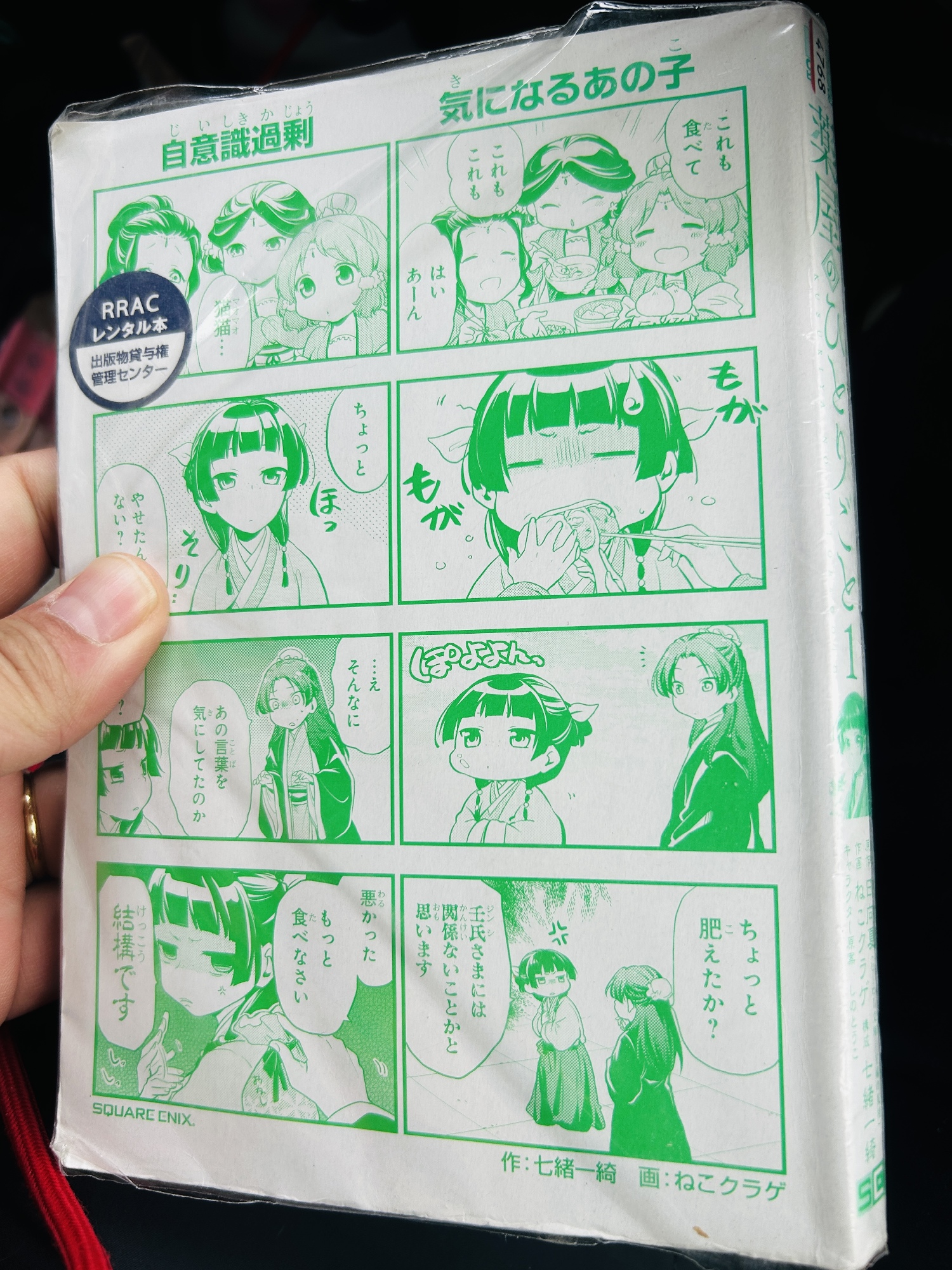
以下、この漫画の良い点を3つ、挙げてみました。
薬屋のひとりごとの良い点は?
◉読み手が感情移入しやすい設定になっていること
一つ目は、読み手の感情移入のし易さです。でもこの「感情移入のし易さ」は、物語として自分を投影しやすいというよりも、物語の設定そのものがそうなっているということだと思いました。
主人公の「猫猫(マオマオ)は、2ページ目で唐突に「傍迷惑(はためいわく)にも人攫いに誘拐されてしまった」とあります。
普通に読めば大変なことのはずですが、さらりと「傍迷惑にも」という言葉が挿入され、まるで他人事のように主人公がこの出来事を受け止めている様が描き出されています。大変な状況であるに間違いないはずなのに、このようにして生み出された距離感は、悲壮感を遠ざけ、どんな状況に置かれていても自分を冷静にみる、ある種の強さを感じ取れます。
読み手である私たちもなにがしかの境遇に置かれていて、人攫いに遭う可能性は決して高いわけではありませんが、なにがしかの自分の経験を投影して、主人公の置かれた「向こう側」の世界に導かれるようです。しかも主人公が自分に起こった出来事を「傍迷惑にも」と語っている点が、さらに物語の設定の中に読み手を誘い出す仕掛けになっています。
物語というものは、私たちの生きている世界を乗り越えたり、そこに意味付けしたり、解釈したりする上で不可欠なものです。
つまり自分自身の生きている世界も物語であり、その物語に沿って私たちは自分の人生を解釈しています。その私たちの生きている物語と、この漫画の物語が、ある種の体験の共通感覚を通して相互リンクされるようです。主人公の体験することを、自分の体験という解釈項で捉えつつ、私たち読み手の想像が刺激されていくのだと思います。
◉薬剤師の視点がどこにあるのかを表してくれていること
この作品の魅力の二つ目は、主人公がどうやら「薬師(薬剤師)」であるということから来る特異性です。現在、日本では人口に対する薬剤師の比率は0.1%。つまり千人に一人の割合です。寄ってこの主人公の視点は多くの読み手にとっては新鮮味のあるものであって、そのため知的好奇心をそそるものであるということができると思います。
たとえば主人公が仕える王家では、王家に生まれた乳児が連続して亡くなるという悲劇が起こります。それを知った主人公は、毒味をした召使いの症状から、なにがしかの原因を察知し、これが単なる事故ではなく事件ではないかと推定するのです。
薬剤師の重要な働きの一つは、お薬を飲んだ患者様の容態から、お薬の副作用症状が出ていないかをチェックするということです。
最近は薬剤師の業務に服用後のフォローアップということで、たとえばインスリン注射が処方された患者様に、使用後の様子などを確認するために電話をさせていただく機会も増えてきました。インスリンの効きが強ければ、冷や汗、ふらつきなどの低血糖症状の兆候が見られることが多いからです。つまりこの作品で描かれている分析は、確かに私たち薬剤師のそれであると感じます。
この『薬屋のひとりごと』という漫画は、西洋医学を前提とした薬剤師の働きというよりも、基本的には中国を起源とする漢方薬学の知見を前提とした物語設定となっていると言えます。
第1巻に出てくる「媚薬」や「万能薬」といった、現代の西洋薬学の考え方や歴史にはあまりないものです。
ただし、かと言ってこの物語が、全く漢方的な考え方か?というとそうでもなく、第1巻に「媚薬」として出てくるチョコレートなどは、南米の民間療法の文化などを背景として生み出されたもののようです。
実際のところ私たち薬剤師の専門性は、単に化学構造を持ったお薬それ自体についての知見だけなのではありません。そのお薬が体に入ってから、吸収、代謝、排泄される動きを学問していることが、医療現場における薬剤師の強みであるのです。
◉人とお薬との関わりについて深く考えさせられる点
3つ目にこの作品の魅力は、私は「人とお薬」との関わりをテーマに扱っていることであると思いました。
お薬は、健康であれば多くの人がもしかしたら縁のないものかもしれません。実際、薬局に来られる多くの割合は、中高年以降の患者様が高いのは間違いありません。
しかし、感冒(いわゆる風邪症状)や感染症などは幼児期から身近な疾病であり、特に免疫が形成される3、4歳までの幼児には、むしろ薬剤は身近な存在と言えます。
薬剤師としての勝負は、患者様が薬局に入ってこられた瞬間から始まっています。患者様の性別、外見、様子の察知から始まって、処方箋に記載された生年月日、お薬手帳から読み取れる過去の記録、そして何より患者様の持ってこられた処方箋から、現在の状態、声にならない体の声を聞き取って、対応させていただいてます。
ほんの数分の接遇であるかもしれません。でもその数分間の中で、患者様の人格を感じ取りつつ、性格的、生活習慣に関わる事柄などを把握し、お薬の服薬指導をさせて頂いているのです。
1日に少なくとも30人以上の患者様を毎日のように、しかもかなり患者様のプライバシーに踏み込んだ形で対応させて頂く薬剤師という職能は、少なからず薬剤師に、他の業種に携わることとは違う職能を与えてくださるものであると感じます。
『薬屋のひとりごと』という作品に多くの方々が関心を持ってくださっていることを、私も薬剤師の一人としてとても嬉しく思っています。
I’m Kurihara, a pharmacist involved in home medical care in Fuji City and Fujinomiya City.
[[Table of Contents]]
[Main Heading]“The Apothecary Diaries” Medicine Notebook?[/Main Heading]
https://kusuriyanohitorigoto.jp/news/1174/
The other day, a patient asked me, “Do you have the medicine notebook from The Apothecary Diaries?” I replied, “I’m sorry, I’m not familiar with it.” Later, I looked into it and found out that it’s a medicine notebook created in collaboration between the Japan Pharmaceutical Association and the anime series.
Apparently, it’s extremely popular, and some are being resold at high prices on flea market websites.
[Main Heading]What Is a Medicine Notebook, Anyway?[/Main Heading]
A medicine notebook is a booklet where stickers of the patient’s prescribed medications are affixed, and records of allergies or medical history can also be written. If you carry one, any hospital in Japan can grasp your current medication status. These notebooks are generally distributed for free at pharmacies, and they’re not intended to be resold on flea market sites.
[Main Heading]What Is a Family Pharmacist?[/Main Heading]
What, then, is the “Family Pharmacist” written on the notebook cover?
A Family Pharmacist is a pharmacist designated by the patient, who takes charge of all medication-related matters, including prescriptions from multiple hospitals, over-the-counter drugs from drugstores, and interactions with health supplements.
Therefore, a patient doesn’t have multiple family pharmacists at different pharmacies—just one assigned pharmacist per person.
Because of this role, the pharmacist is expected to be available for consultations even in everyday life. You can always obtain the contact information that connects directly to your assigned pharmacist.
Let’s imagine an extreme case. Suppose a patient lives alone, has no relatives, and one day falls and is taken to the hospital by ambulance. The problem for the hospital is not knowing what medications the patient has been taking—or even if they take any at all.
Since hospitalized patients often need to continue their medications, having a medicine notebook can be extremely helpful. And the one managing that notebook is the Family Pharmacist. Moreover, even if the notebook is lost, the Family Pharmacist can provide the hospital with medication information based on the patient’s medication history, which is stored at the pharmacy.
The fact that the anime The Apothecary Diaries, which seems to be very popular, is giving people an opportunity to learn about family pharmacists is something that brings great joy to all pharmacists.
…That said, as you may have already noticed from my tone, I’m not particularly into anime or manga. But given how popular this one is, even I found myself curious. I promptly went to the rental store and borrowed Volume 1 of The Apothecary Diaries.
Here are three things I found appealing about the manga.
[Main Heading]What’s Great About The Apothecary Diaries?[/Main Heading]
[Subheading]◉ The Story Setting Encourages Emotional Engagement[/Subheading]
The first point is how easy it is for the reader to emotionally engage. But this “engagement” isn’t so much about imagining oneself in the story—it’s more that the story itself is designed to draw you in that way.
For instance, on the second page, the protagonist Maomao is abruptly kidnapped by human traffickers—“how bothersome,” she says.
It’s a serious situation, but the phrase “how bothersome” makes it feel almost impersonal. This detachment distances us from the sense of tragedy and instead gives us a feeling of inner strength—a calm awareness even in adversity.
We, too, might be going through our own trials—though perhaps not kidnapping—but we project our experiences onto her world, entering the “other side” of her story. Her comment, “how bothersome,” serves as an invitation for the reader to step into the setting.
Stories are essential for interpreting or finding meaning in our own lives.
In that sense, our lives are also stories. This manga’s narrative links with the reader’s experiences, encouraging imagination through shared emotional undertones.
[Subheading]◉ It Conveys the Perspective of a Pharmacist[/Subheading]
The second charm of the work lies in the uniqueness of having a protagonist who seems to be a “herbalist” (pharmacist). In Japan, pharmacists represent only 0.1% of the population—one in a thousand. That makes her point of view feel fresh and intellectually intriguing to most readers.
For example, when infants of the royal family die in succession, Maomao suspects foul play. She detects a clue from a food taster’s symptoms and hypothesizes that this isn’t just an accident—it’s a case.
A pharmacist’s role includes monitoring for adverse drug reactions based on a patient’s condition.
Recently, pharmacists are even following up after dispensing—like calling patients who received insulin injections to check on their status, as low blood sugar can cause symptoms like dizziness or cold sweats. The analysis in this story indeed mirrors that of a pharmacist.
While The Apothecary Diaries is set more in the realm of traditional Chinese medicine than Western clinical pharmacy, the topics like aphrodisiacs or panaceas in Volume 1 aren’t found in modern pharmacology.
However, even items like chocolate, introduced as an aphrodisiac, draw from South American folk medicine—a reminder that pharmacists’ expertise isn’t just chemical knowledge, but includes the pharmacokinetics of how drugs are absorbed, metabolized, and eliminated in the body, which is our real strength in clinical practice.
[Subheading]◉ It Encourages Thought About the Human–Medicine Relationship[/Subheading]
The third thing I found compelling is that the story deals deeply with the theme of humans and medicine.
Medicines may seem unrelated to healthy people. In fact, most people who come to pharmacies are middle-aged or older.
But illnesses like colds and infections are common from early childhood, and for children under 3 or 4—whose immune systems are still developing—medicine is quite familiar.
For pharmacists, the moment a patient walks into the pharmacy is when the engagement begins.
We start with observations—gender, appearance, demeanor—and use birthdates on prescriptions, history in the medicine notebook, and above all, the prescription itself to infer silent signals from the body.
Even if our interaction is just a few minutes, we try to grasp the patient’s personality, habits, and lifestyle, and provide counseling tailored to their needs.
Pharmacists see more than 30 patients a day and handle private information closely. That gives us a distinctive professional role unlike any other.
I’m genuinely pleased, as a pharmacist myself, that so many people are interested in The Apothecary Diaries.